Home Blog Page 5

The Ninety-Somethings

0

A good friend in Michigan announced the very recent passing of his father.  I never met his father, but the son, my friend, is someone with whom I have spent time discussing things professionally and also passing time as we solved the world’s problems.  The man was in his mid-nineties and a World War II veteran.  A year has passed since I received a similar announcement from another friend in New York.  In the latter case, I had met her father once, and we had dined together, having had a great, enjoyable and memorable evening. 

My thoughts of their passing were, for some inexplicable reason, emotional.  The passing of these two men made me pause and consider the fact that during the past year I have met two other men who are in their mid-90s.  Regardless where these men came from, what their long life’s activities may have been, the one thing that I realized that makes them special to me is that these men served their country during World War II.  I wonder if it would be possible to meet men of that age who did not serve in uniform during that war.

Considering the men I have met or fathers of friends who have lived into their 90s, their wartime service experience screamed out at me.  We often hear about the Greatest Generation and the men and women who make up that generation.  These men represent something special in the history of the United States.  They were of the depression era and a tough life as children and youth only to be called upon to fight a global war in Africa, Asia, and Europe. 

They created that glue that bound people to a common cause, common objective of a hard-working country that could do so much.  A horrific world war, their service, their sacrifices and the way they came home and went about their lives framed the way the country moved forward during the post-war period. 

They did not necessarily address the injustices of their own country, but they gave the country the time to progress to become the global beacon of the ideals that others sought to achieve.  We should remember that many of them returned home to create a vibrant economy and delivered a working middle class that was envied by the world.  Many of their contemporaries became elected officials who, while there remained many shortcomings of the promise of the country’s founders, worked hard and succeeded in passing legislation in the 1960s to address some of those injustices.

The passing of each of our 90-somethings citizens is more than the loss to one family.  It is a national loss to that direct link to a special time in U.S. history.  These are the great grandparents who, in their youth, confronted hardships that the vast majority of Americans will, fortunately, never know.    

We lose something of ourselves as we lose the direct link to that period when millions of Americans served and sacrificed far more than we have been asked to do in recent decades.  What they gave the country is its reputation of hard work, overcoming hardship, and some semblance of seeking to self-improve.  With their eventual passing, it may be that the reputation they fought for passes with them as the Greatest Generation hands off the future to something less.      
Veterans and Legacy

0

Money, power, fame and fan adulation appear to be important to politicians, sports figures, television personalities, and online influencers among others.  Given all the headline attention that some of the people in those fields receive, it is no surprise that a combination of big bank accounts, influence, and the spotlight follow.

Veterans, the thousands of anonymous men and women who are asked to be constantly ready for the worst things that might happen the country, do their work for modest pay, no “power” beyond the power that comes with their rank and respect from their fellow men and women in uniform.  Their “business” is done outside the limelight and make headlines when something happens that many would rather not see.  No one gets rich while serving in uniform and the few that may have any fan following get it after some horrific events have occurred.

The unfortunate historical development of the past fifty-five years is that we demonized our combat veterans of the Vietnam era.  Society’s reaction to those who met the call and served in Vietnam caused them to go “underground” in the sense that many who served their two or three-year commitments left the military and attempted to bury that experience and hide it for decades after their service. 

Veterans of the Vietnam era were the last to confront something that the majority of Americans today may not comprehend—conscription, or more commonly referred to as the “draft.”  Unlike today’s volunteer military, tens of thousands of young American men waited for the draft board to send them their notices, or facing the inevitable, some signed up with the knowledge that it was only a matter of time till they would be called upon to serve.  Drafting manpower to fight in Vietnam invested more of U.S. society into following what the Government was doing and that resulted in the pressures to find a way out of an unpopular war.    

During the past twenty years of wars in Iraq and Afghanistan, we seemed to have made a deliberate effort to make a distinction between the politicians and their decisions about wars and those who have volunteered to serve and fight the wars.  In recent years, on the streets, on television, on social media platforms, and elsewhere, we often hear or see notes expressing, “Thank you for your service.” 

It is hard to determine if expressing that sentiment allays the bitterness that some of our Vietnam veterans have felt for decades.  Whether it does or not, what is evident is that we do see more and more of our Vietnam combat veterans and other Vietnam era veterans wearing hats or shirts that signify their past service. 

While the vast majority of the veterans of our most recent wars are still relatively young, we should remind ourselves that as the few remaining World War II veterans pass away, the youngest of our two other wars (Korea and Vietnam) are now at least seventy years old.  Our Korean War veterans are well into their eighties.  With the withdrawal of U.S. combat troops from Vietnam in 1972, the youngest of those veterans are nearing seventy years old with the vast majority having already passed that milestone.

From the veterans of our most unpopular war, there is a great legacy being left to us by our Vietnam veterans.  The greatest legacy is the one they have given each other . . . life.  When a group of these old warriors reunite with men from their old units, they may shake hands, they may give their buddies a squeeze on the shoulder or a healthy slap on the back, but many embrace each other, embracing the life they gave each other for these additional fifty-plus years. 

That gift of life to each other has led to spouses, children, and grandchildren.  They provided each other a return home to see parents and siblings, living decades that were denied their fellow warriors who fell in battle.  Reunions are a time when each of these old warriors can see the legacy of generations that they gave each other. 

Today, the men and women who served decades ago in that most unpopular war are proud of their service.  Many proudly wear hats or shirts that signify their service.  These warriors, having their service and sacrifice disparaged for many years, have aged with the knowledge that, in the eyes of those who matter—their brothers in arms, they served with honor.  They had each other’s back.  They gave each other the legacy of life, allowing them to raise their families.  As individuals, they may not have fame or fortune, but the gift they gave each other is priceless.

Writing and Publishing in Time of War

0

Andrey Kurkov, the renowned Ukrainian author of Grey Bees and president of PEN Ukraine, gave the opening keynote address at the U.S. Book Show. With a theme of writing and publishing in time of war, Kurkov opened the virtual trade book fair in conversation with Edward Nawotka, Publishers Weekly’s international editor. The opening keynote took place in English.

“Andrey Kurkov’s work has always been visionary and is as relevant now as it has ever been. He offers the world a poignant view of life in Ukraine,” said Nawotka. “His work is darkly humorous in a way that only an observer with Kurkov’s global understanding—and bird’s-eye view—could provide.”

Andrey Kurkov is the author of 19 novels, a dozen of which have been translated into English, nine children’s books and 20 movie and television scripts, Kurkov became known on the world stage with his international bestseller Death and the Penguin, a bleak portrait of post-Soviet Ukraine. The English translation was published in 2001, and since then the book has been translated into 30+ languages. He was elected president of PEN Ukraine in 2018 and on May 13, 2022 delivers PEN America’s annual Arthur Miller Freedom to Write Lecture. He will also participate in its Emergency World Voices Congress as part of the 2022 PEN World Voices Festival (May 11-14)

U.S. Book Show Opens Today

0

The U.S. Book Show opens today. The virtual trade book show (#USBookShow) runs May 24 – 26, 2022, with its primary mission to promote Fall 2022 books of particular interest to booksellers, librarians, book media, agents and publishing professionals.

“The U.S. Book Show promises to make an even bigger splash in its second year,” said Cevin Bryerman, CEO and publisher of Publishers Weekly. “We will again welcome a diverse slate of authors and even more of the popular Editors’ Picks panels looking forward to the fall.”

Further components have been layered on to the virtual book publishing trade show, now in its second year. New this year, an international pavilion will welcome exhibitors from outside the United States.

Bookseller-focused programming has also been broadened to include tactical discussions geared toward keeping stores healthy and thriving

Editorial programming forms the core of the three-day show, and this emphasis will continue in 2022. In 2021, Oprah Winfrey opened the inaugural show. Subsequent days saw keynotes from Ijeoma Oluo and Senator Elizabeth Warren. Author Spotlights featured Anthony Doerr, Padma Lakshmi, Keanu Reeves, Stevie Van Zandt and Brian Selznick. Attendance in 2021 topped 6,000, among them nearly 1,000 members of the media. The show was covered by the New York Times, Washington Post, Library Journal, Associated Press and others.

Most popular are the genre-focused Editors’ Picks panels, in which Publishers Weekly’s editors, in conjunction with influential book editors, select the Fall titles they believe are most buzzworthy. The editors then convene in conversational panels focused on various genres— among them, fiction, nonfiction, comics and graphic novels and children’s books.

Dedicated library programming will be front and center once again with thought leaders weighing in on topics such as book banning that directly impact libraries and readers. Industry programming will delve into issues of how or if the pandemic has permanently changed book publishing, digital marketing and more.

“In the spirit of Publishers Weekly’s long-held commitment to global commerce and collaboration, the U.S. Book Show has implemented an international pavilion of exhibitors, with a special panel of international publishers discussing the global future of the industry,” added Bryerman, who is overseeing the international outreach.

Chicago Podcast Day

0

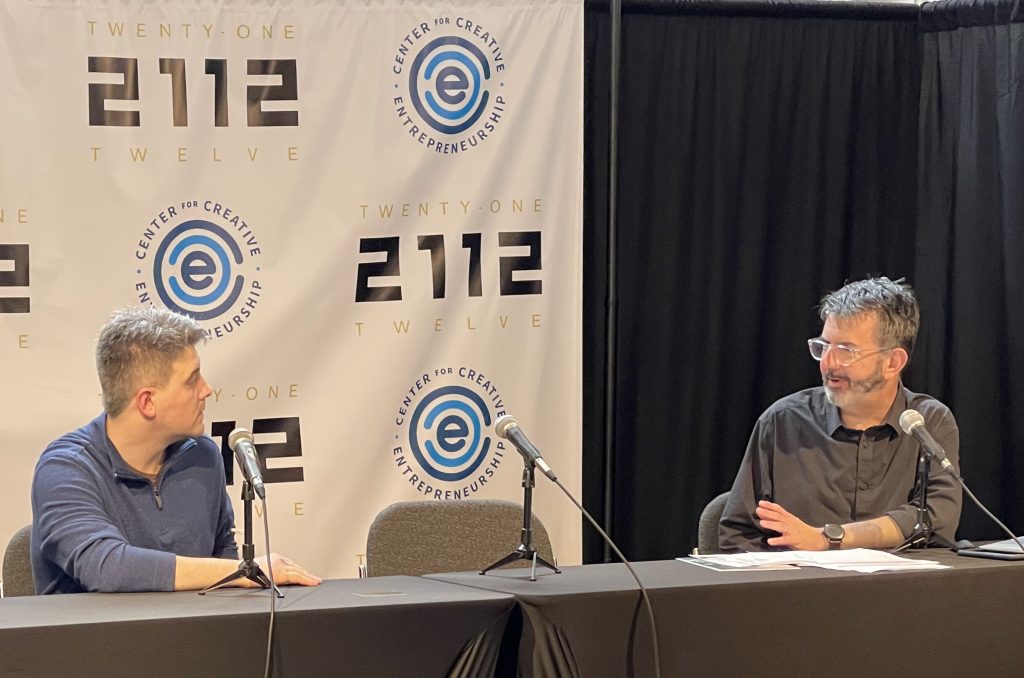
On May 21, 2022, Chicago Podcast Day featured panels and presentations designed to help the Chicago podcast community create and succeed in the booming podcasting space. Curious about how to launch a show? It was covered. How about monetizing your existing podcast? That, too. Topics included editing tips, legal considerations, DIY marketing and creating a branded podcast for business. All levels were welcomed, from the “podcast curious” to the “seasoned veteran.”

The program was presented by James VanOsdol, 2112 Chicago, and the Center for Creative Entrepreneurship.

Jaime Black (Dynasty Podcasts) discusses the process of starting a podcast.
Attorney Ilya Zlatkin (Zlatkin Wong LLP) discusses legal issues with James VanOsdol.
Creating a Branded Podcast with Patrick Brewer and Alex Stewart (Sassy Confetti)

Speakers:

Amy Guth (Crain’s Daily Gist)

Jill Hopkins (Metro/GMan, formerly Vocalo)

Ilya Zlatkin (Zlatkin Wong LLP)

Chris Lanuti (Sox in the Basement)

Lou Carlozo (Qwoted)

Jaime Black (Dynasty Podcasts)

Alex Stewart (Sassy Confetti)

Erik White (Cumulus Media)

Mike Vanderbilt (Halloweenies)

Martin Atkins (Museum of Post Punk and Industrial)

Todd Ganz (If the Walls Could Talk)

Attitude is Everything

Have you ever imagined being the hero of the day? Imagined yourself being one day rich and famous? We all have. Whether it is the flash of us crossing the finishing line first. Or being a movie star with fame and fortune. Or a famous businessperson featured in national magazines. We all have imagined how our lives might be one day when our dreams turn into reality. It is these moments of inspiration that drive Entrepreneurs to their goal.

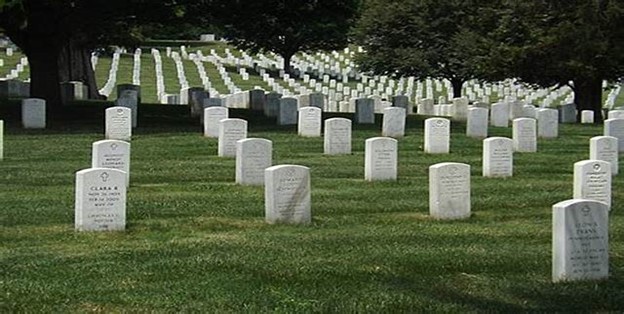
Arlington Cemetery

0

Honoring the men and women who have fought for our country and the freedoms we enjoy each day.

When will the owls cease to be Watchers?

0

Owls have been known to perch among the branches—and have been accused of watching the world go by. While Truth has it that owls have been long sought out as birds of wisdom, so too does it tell that owls are tremendous observers.

And that the watchers of society need to heed the wisdom inherent in owls. For, although it is granted that owls do indeed see everything, they tend to be pictured as aloof—above the fray. And yet, in a turmoil-boiled world, comfort can be derived from the fact that owls are designated to observe, comment, and inspire.

Maybe, it’s not the owls’ aloofness that bothers watchers. But rather the owls’ ability to transform a moment of silence to a flutter of activity within a once tranquil sea of conformity.

Or maybe, it is the unknown quality behind those pictures of owls that seem to frighten people.

There seems to be a power gathering beneath the owls’ surface which will eventually be released—when the owls cease to be Watchers.

Yona Goes To the Magic Flute

0

Yona Goes To The Magic Flute is a fun-filled fantasy introduction to Mozart’s great opera, The Magic Flute (Die Zauberflöte).

An extraordinary young girl travels with her teachers and her friend, Ulysses, to the Metropolitan Opera in the Flights of Fancy, a flying piano. Their adventure/lesson is a unique introduction to Mozart’s genius––for opera goers, their children, and grandchildren.

The young heroine is Yona Short, who has magical musical powers. She can change human behavior just by THINKING ABOUT MUSIC.